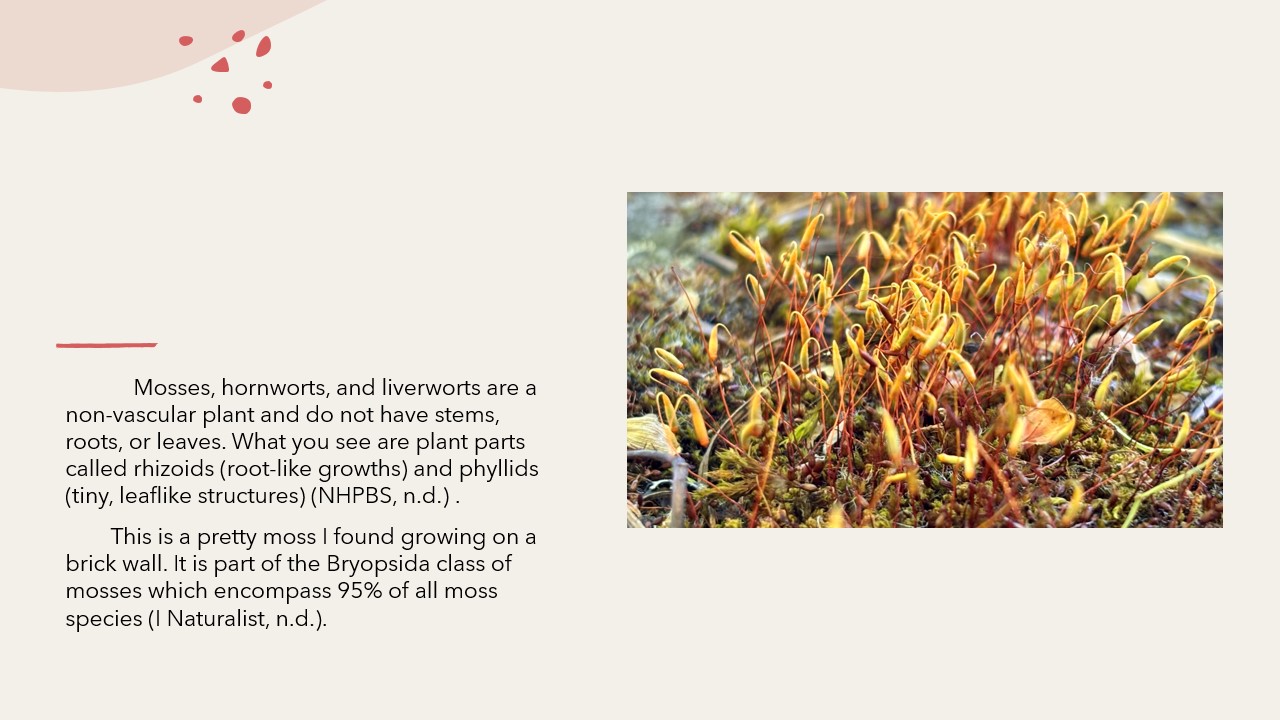
Vascular plants are those that have tissues that facilitate the internal transportation of nutrients. This internal system is very much like our own blood vessels and arteries and allows for the development of larger structures such as leaves and roots (Holt, n.d.). This is in contrast to non-vascular plants (collectively referred to as bryophytes) which do not have vascular tissues or organs and must rely on diffusion and osmosis for their water and nutrient needs (Crooks, 2021). Bryophytes tend to be small, mat-like, and do not have roots or leaves. Types of non-vascular plants include liverworts, hornworts, and mosses. Types of vascular plants encompass ferns and fern allies, gymnosperms, and angiosperms.

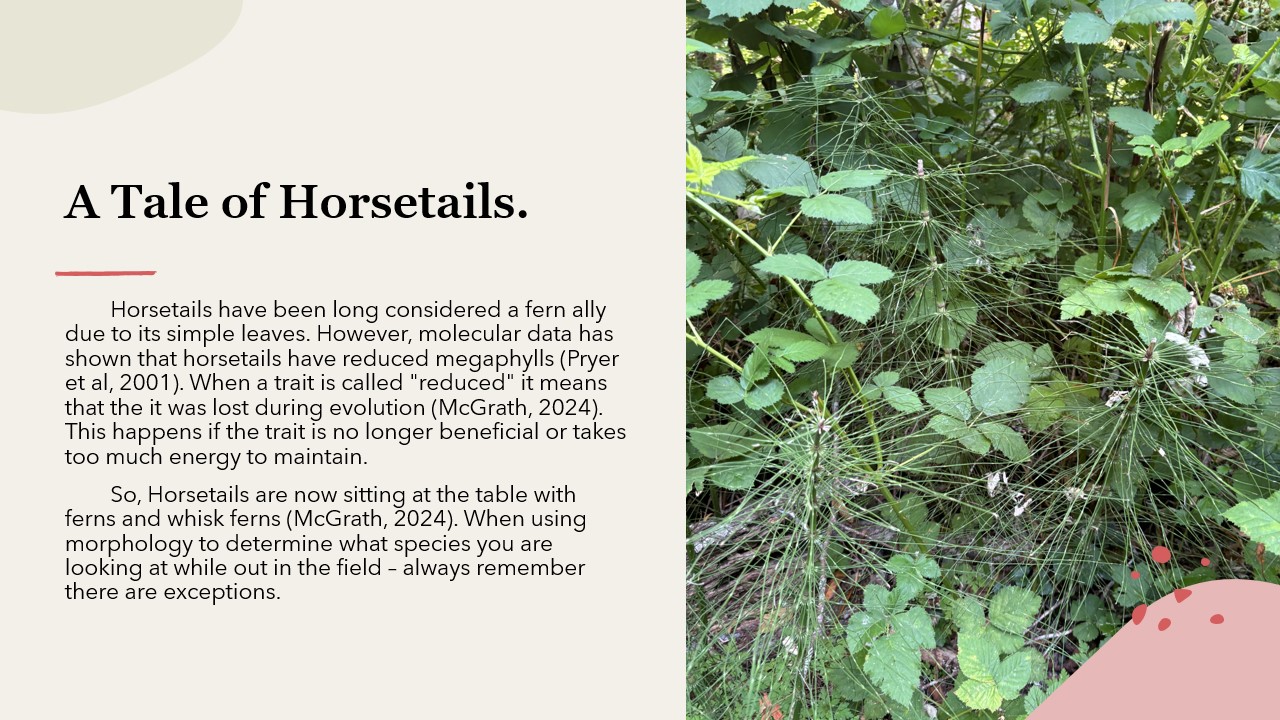
Ferns and fern allies do not reproduce via seeds or flowers but through spore dispersal. Morphology, the study of form, structure, and shape, has been the primary way to determine how species relate to one another. The major morphological difference between ferns and fern allies are the leaves which are referred to as megaphylls in ferns and microphylls in fern allies (Tomescu, 2009). Megaphylls are defined as larger leaves with complex venation and gaps in the stele. A stele is the core of vascular tissue found in the center of a plant's root or stem. Microphylls are less complex, smaller, and typically do not have gaps in the stele (Tomescu, 2009). Advances in technology have made it possible for scientists to use genetic information to further increase our understanding of how species are related to each other. In some cases, molecular data has shown that we made some some mistakes when relying on morphology alone to determine relatedness of species (see a Tale of Horsetails). What I love about science is that new information is embraced rather than rejected. You learn something new, make changes - and then continue looking for new information.
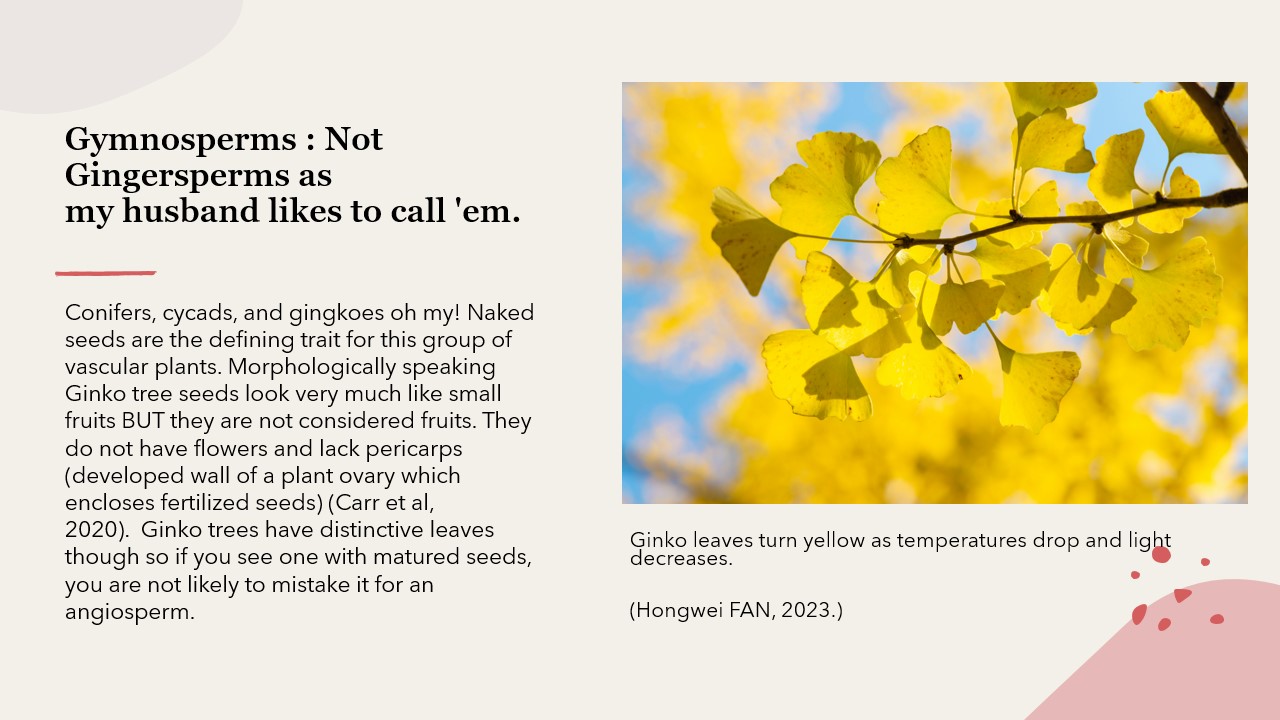
Vascular plants that reproduce via seeds or flowers are either gymnosperms or angiosperms. Gymnosperms have seeds borne in cone-like structures and do not produce flowers. The leaves of gymnosperms tend to be shaped like needles, have scales, or are subulate (tapering from a wide base to a narrow tip) (Gilkey & Dennis, 2001). In the Pacific Nortwest, these plants are typically evergreen trees or shrubs. Evergreens are plants that keep their green color through more than one season. Some examples are pine tress, redwoods, and sequoia
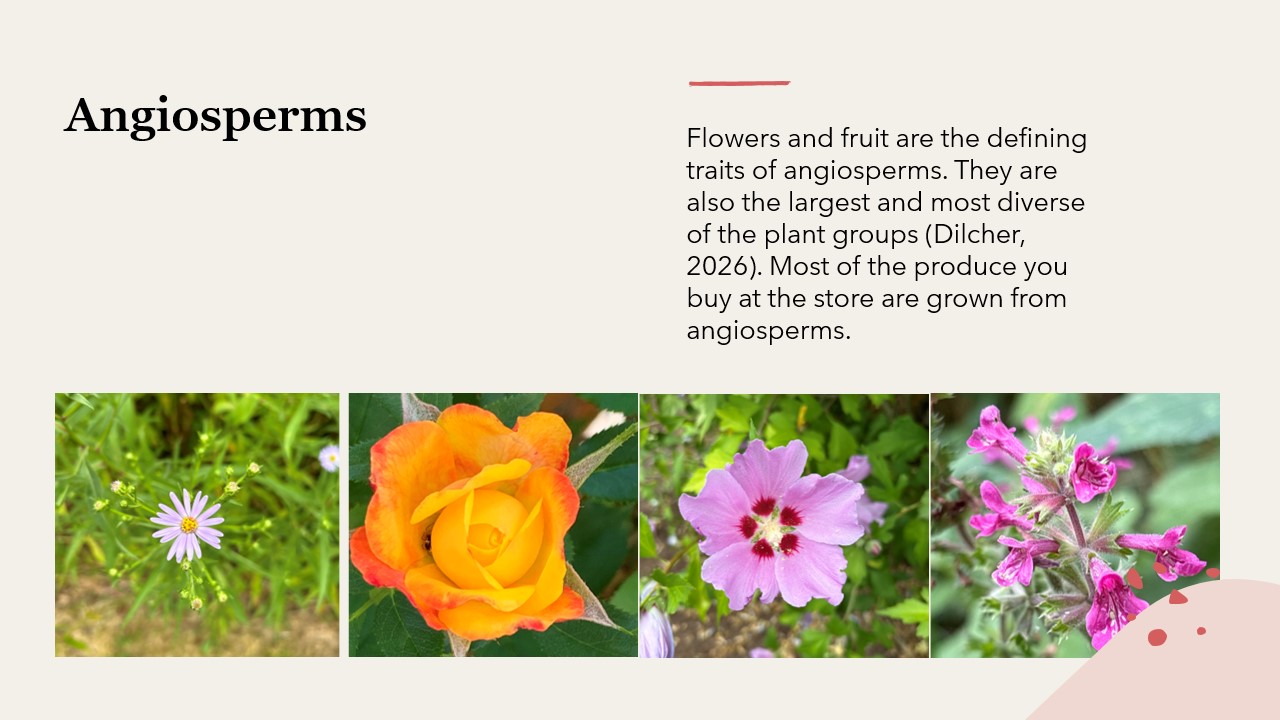
Angiosperms do produce flowers and seeds are borne in fruits. This is the largest and most diverse group of plants and the kind we (as people) interact with the most. Produce in the grocery store, flowers from the shop, trees in the park - all are from angiosperms. This group can be further divided into monocots and dicots (to be covered next time!)
Is it a fern, bryophyte, gymnosperm, or angiosperm? (Hover over image for answer)
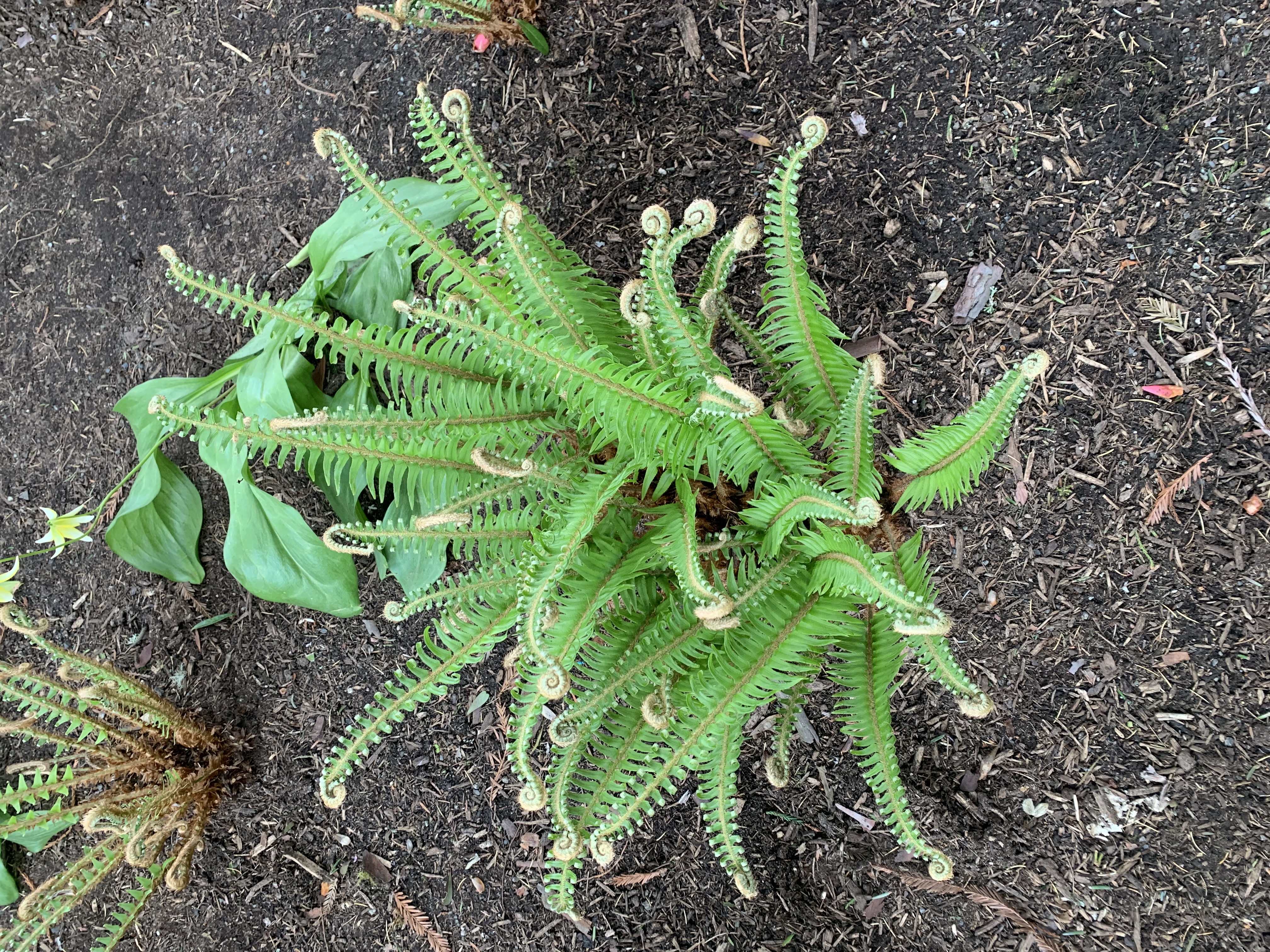
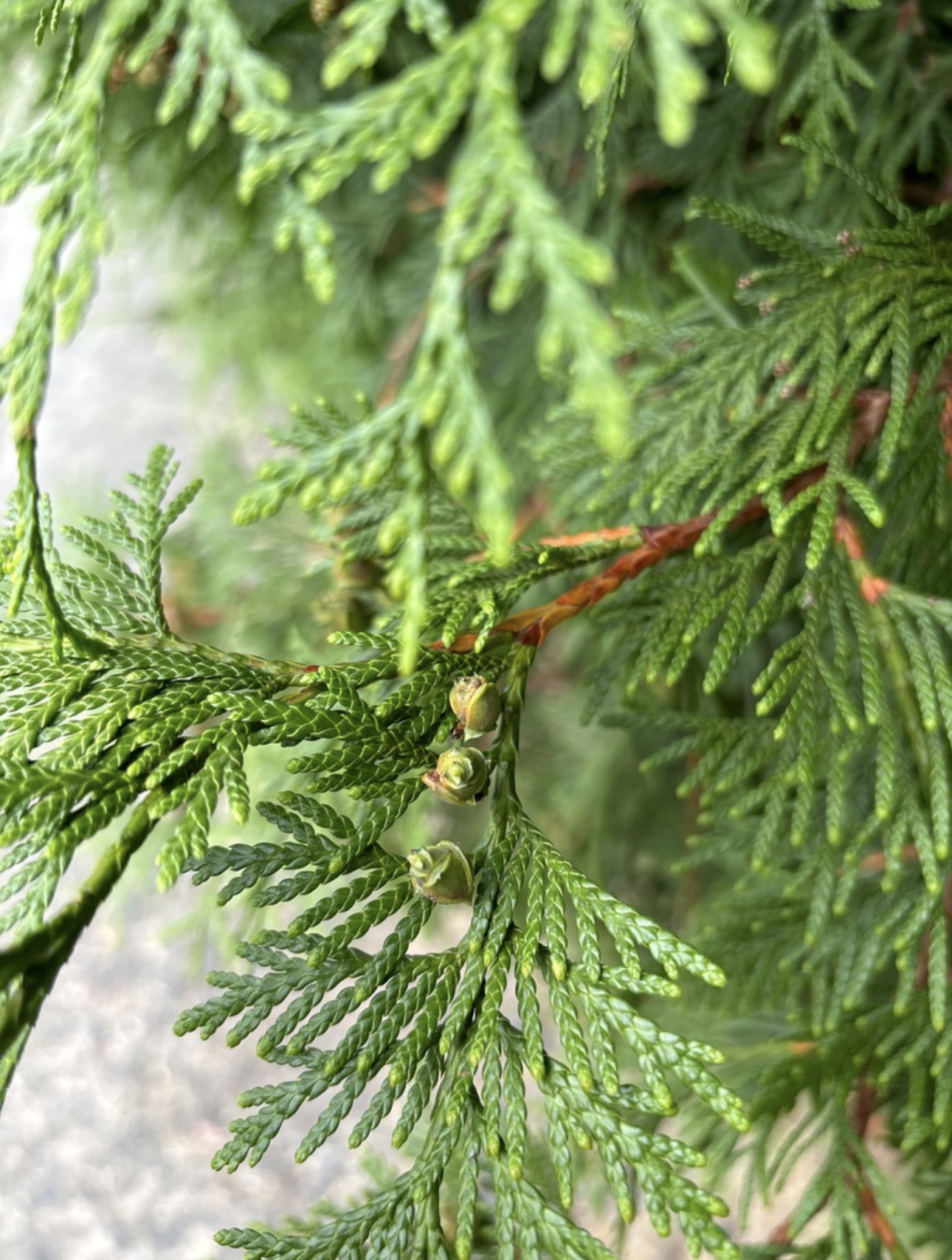
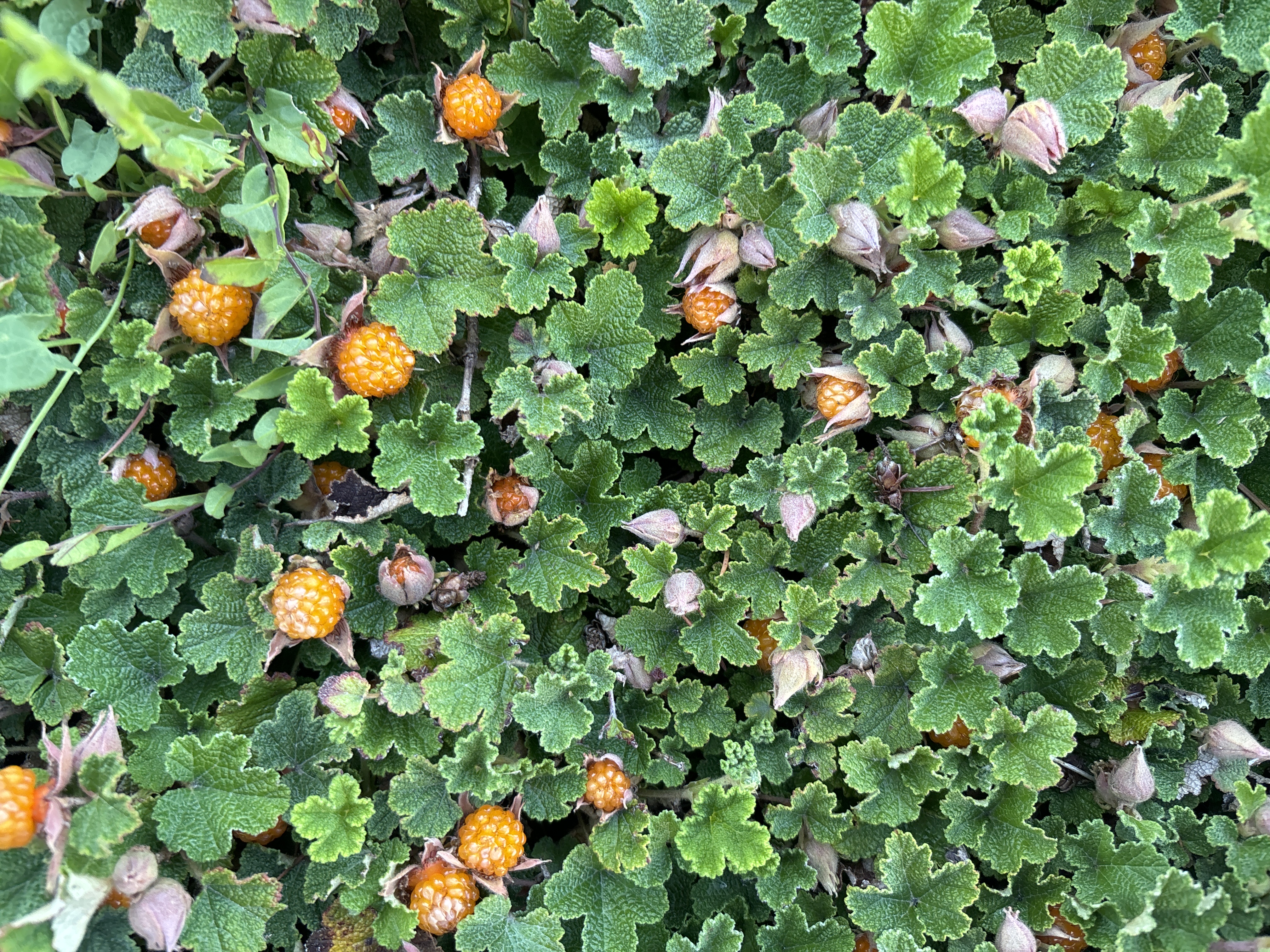
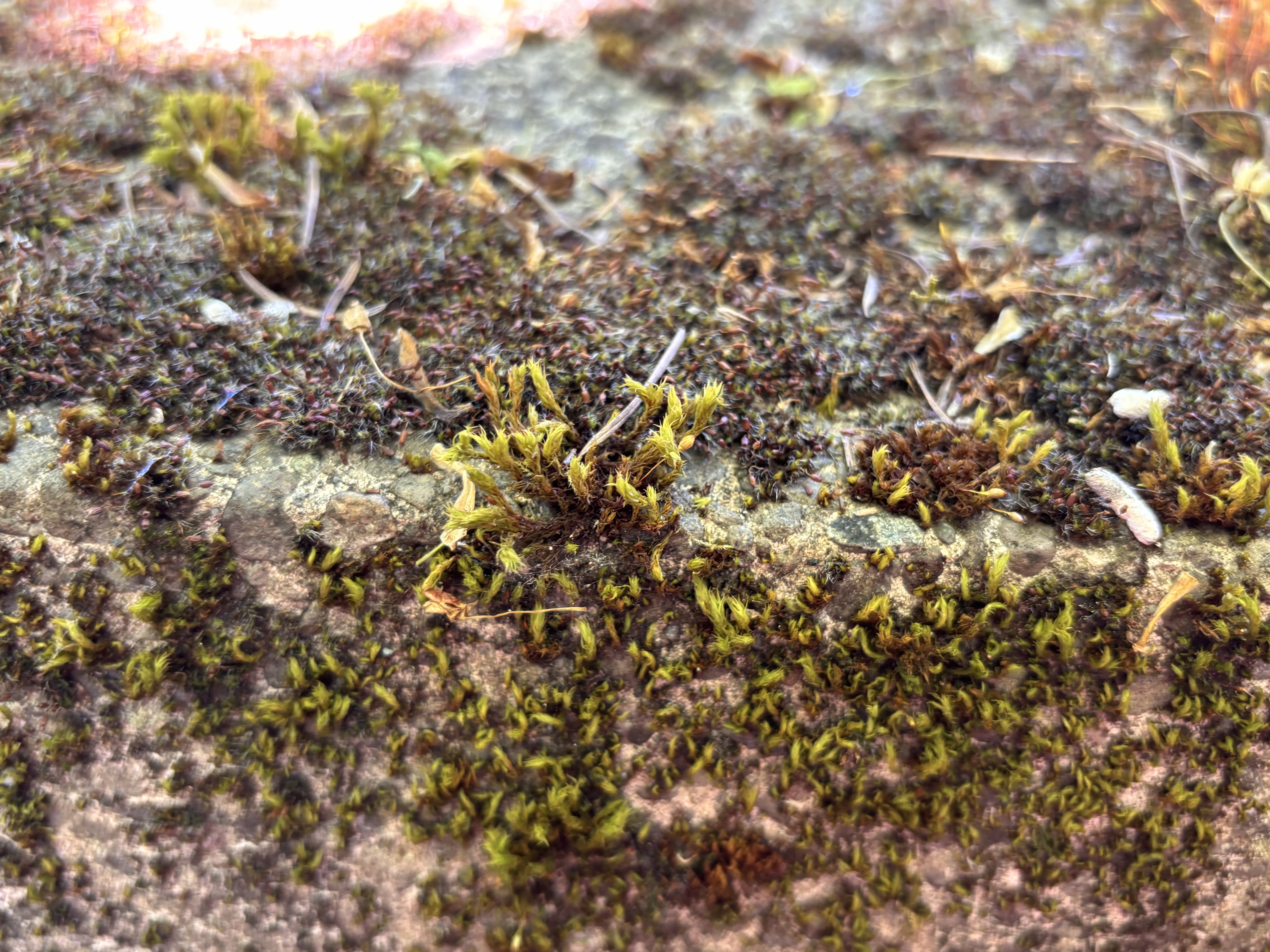
On your next walk, try to notice the plants around you. What category of plant do you think they are a part of and why? Maybe snap some images and keep them in a notes app to start a digital field journal or go old school with a notebook and pen to draw what you see. You can also download the iNaturalist app and upload the images to find out what species of plant or animal you see and to make that info available for science and conservation purposes.
Carr, D., Schmidt, C., Firebaugh, A. (2020). From Green to Gold: The Fall Transformation of Ginkoes. University of Virginia. https://engagement.virginia.edu/learn/2020/12/04/from-green-to-gold-the-fall-transformation-of-ginkgoes
Crooks, V. (2001). Bryophytes. Smithsonian Tropical Research. https://stri.si.edu/story/bryophytes
Gilkey, H.M. & Dennis, L.J. (2001). Handbook of Northwestern Plants. Oregon State University Press. Corvallis, Or.
Holt,J.S. (n.d). Biology of non vascular and lower (seedless) vascular plants.https://my.ucanr.edu/repository/fileaccess.cfm?article=163652&p=EATIBS
Hongwei FAN (2023). a branch with yellow leaves against a blue sky [image] Unspash. https://unsplash.com/photos/a-branch-with-yellow-leaves-against-a-blue-sky-1h50CjkxIig
McGrath, C. (2024). Highlight: Lost traits and persistence of complexity. Genome Biology and Evolution 21; 16(5). https://doi.org/10.1093/gbe/evae101
Pryer, K.M., Schneider, H., Smith, A.R., Cranfill, R., Wolf, P.G., Hunt, J.S., Sipes, S.D. (2001). Horsetails and ferns are a monophyletic group and the closest living relatives to seed plants. Nature 409(6820). doi: 10.1038/35054555. https://pubmed.ncbi.nlm.nih.gov/11214320//
Stevens, P., Dilcher, D.L., Berry, P.E., Cronquist, A., Stevenson, D.W., Zimmermann, M.H. (2026) Angiosperm. Encyclopedia Britannica, https://www.britannica.com/plant/angiosperm. Accessed 12 May 2026.
Tomescu, A. (2008). Megaphylls, microphylls, and the evolution of leaf development.Trends in Plant Science, 14 (1); 5-12 . https://www.sciencedirect.com/science/article/abs/pii/S1360138508002987
All uncredited images photographed by myself (Whit)